Executive summary
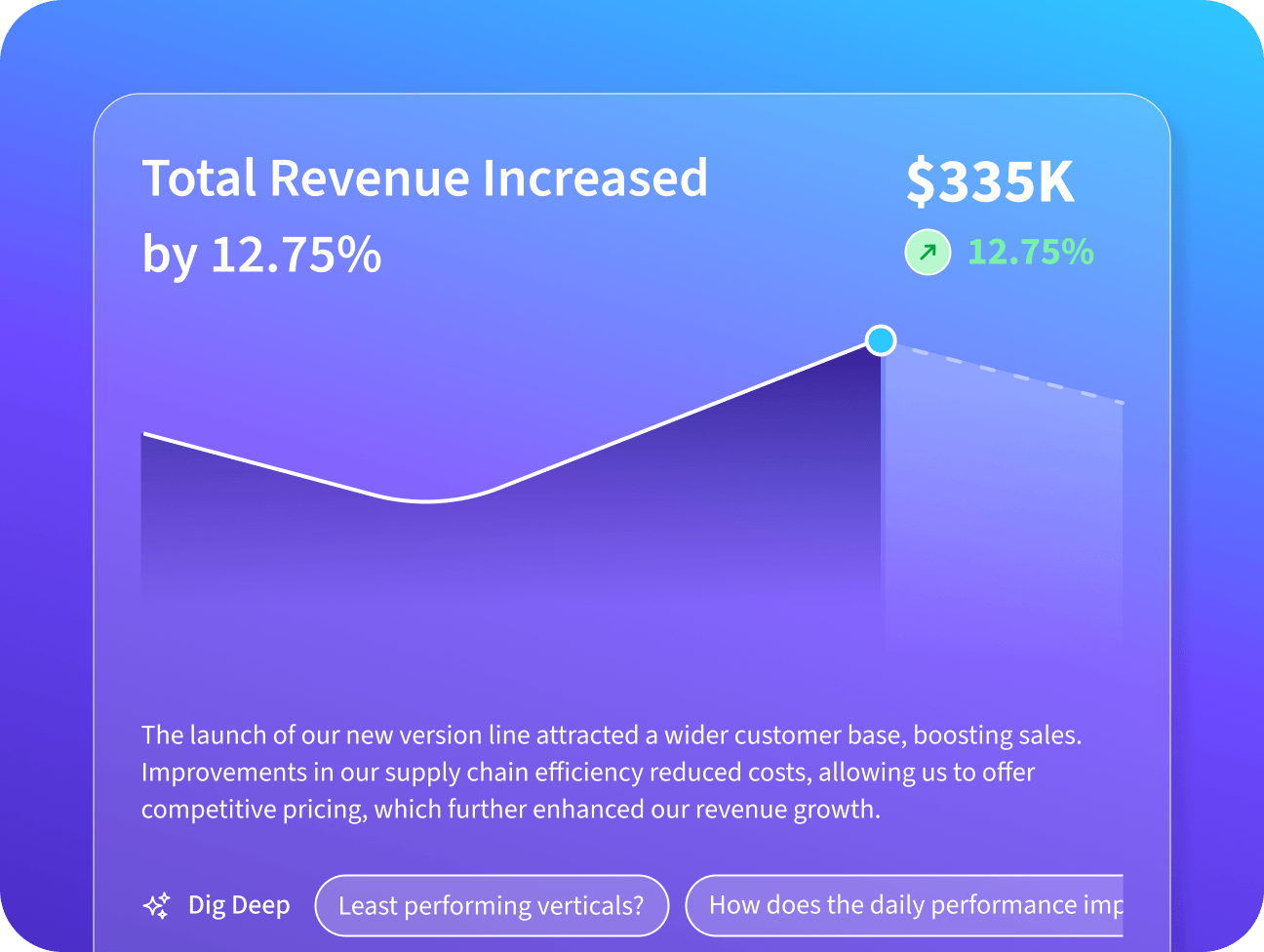
Othor's narrative engine automatically synthesizes signals into short, prioritized summaries — the kind of brief that executives read at a glance and act upon. This feature is highlighted on the home page as one of the platform's core differentiators.
From numbers to narrative
The engine follows a small, repeatable recipe:
- Select a signal (anomalous metric or strong forecast).
- Pull supporting evidence (cohort drilldown, comparison, trend).
- Generate a human-readable headline, explanation, and next-step recommendation.
Example flow
Imagine a sudden drop in conversion for a specific product line. The narrative reads:
"Conversion down 18% this week for Product A — likely tied to recent price change; recommended: roll back recent price change for cohort B and monitor."
Beneath that sentence, Othor shows the key chart and the top correlated metrics (refunds, page load times, promotion tags) so the analyst can verify quickly.
Why this matters
Leaders don't have time for dashboards; they need the one-sentence change and the one-sentence action. Narratives compress the signal and give a readable, defensible path to investigate.
Implementation notes (test purpose)
This test article includes a Figure, H2/H3 headings, and a short code block to ensure the MDX pipeline handles all components the way production posts do.
// pseudocode: assemble narrative payload
const narrative = {
  headline: summary,
  evidence: charts,
  recommendedAction: action,
};