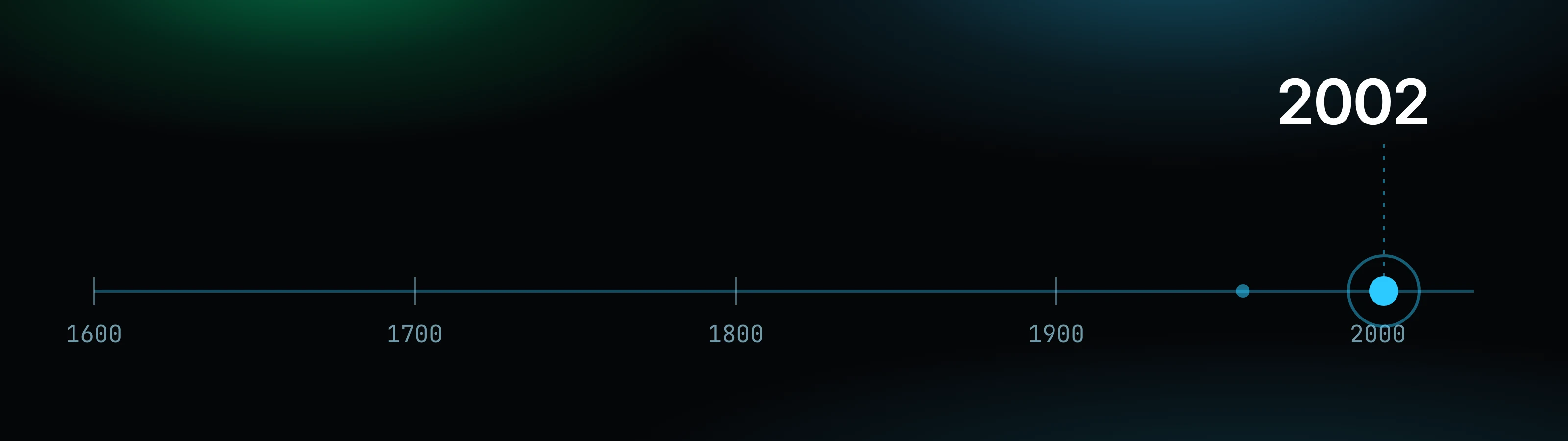
In February 2012, The New York Times Magazine published a long article by Charles Duhigg called “How Companies Learn Your Secrets”. Most of it was about habits. One part of it became the most retold story in retail analytics: how Target learned to predict, from ordinary shopping, that a customer was pregnant, often before she had told anyone.
The story is usually told as a scandal. It is more useful as a lesson about what a prediction is, who it is for, and where an analytics system should stop.
01The business question
Duhigg reports that the work began in 2002, when Andrew Pole, a statistician who had just joined Target, was asked a question by two colleagues from marketing: if we wanted to know whether a customer is pregnant, even if she didn’t want us to know, could we?
The commercial logic was simple. Most shopping is habit, and habits rarely change. A new baby is one of the few moments when they do: people are tired, routines break, and the store they start using for nappies can become the store they use for everything. Birth records are public, so every retailer reached new parents after the birth. Target wanted to reach them before it, in the second trimester, ahead of the competition.
02How the prediction worked
Target already gave each customer a guest ID that tied together card payments, coupons, surveys and returns. Pole’s team started from customers who had signed up for Target’s baby registry and so had told the company their due date. Working backwards through those customers’ earlier purchases, they looked for products whose buying changed in the months before the birth.
They found about 25 products that, taken together, gave each shopper a “pregnancy prediction” score. None were baby products. Duhigg’s examples include larger quantities of unscented lotion around the start of the second trimester, supplements such as calcium, magnesium and zinc in the first twenty weeks, and extra-large bags of cotton balls, hand sanitiser and washcloths close to the due date. Because the timing of each change was known, the model could also estimate a due date within a window, so offers could be matched to each stage.
Nothing in this is exotic statistics. It is a model trained on customers whose outcome was known, applied to everyone else. What made it powerful was the data: years of purchases linked to one person.
03The story everyone remembers
Duhigg’s article includes an account, told to him by someone at Target, of a man who walked into a store near Minneapolis angry that his daughter, still in high school, was receiving coupons for baby clothes and cribs. The manager apologised. When he called a few days later to apologise again, the father said he had since talked to his daughter: she was pregnant and due in August.
Two things are worth saying about this story. First, it has never been confirmed. Target declined to discuss the programme with Duhigg, the family was never named, and the anecdote rests on a single unnamed source. Second, it doesn’t matter much whether every detail is true, because the company’s own response tells you what it believed. According to Duhigg, Target found that customers reacted badly when they realised how much it knew, so it began mixing baby offers in with unrelated ones (a lawnmower next to the nappies) so that the targeting looked accidental. The prediction stayed. Only its visibility changed.
04What the case actually teaches
A prediction about a person is a disclosure. A score that says “this customer is probably pregnant” is new, sensitive information about her, created without her knowledge. Acting on it, even with a coupon, tells her and anyone who opens her mail what the company has inferred.
Accuracy makes it worse, not better. A wrong guess is an annoyance. A right one is an intrusion. The better the model, the larger the duty of care.
Hiding the targeting is not the same as respecting the customer. Disguising offers fixed the reaction, not the problem. Laws written since, from the EU’s GDPR (2018) to India’s Digital Personal Data Protection Act (2023), are built around purpose, consent and keeping only the data a purpose needs, for exactly this reason.
Most business questions don’t need to know about any one person. The owner of a retail chain needs to know that a category is slowing in one region, that a product line’s returns are rising, or that a group of customers has gone quiet. None of that requires predicting anything about an individual.
05Where an analytics system should stop
That last point is a design choice, and it is the one we made when building Othor AI. It looks for what changed in a business, not for what can be inferred about a person:
- It reads the company’s own systems read-only, never reads personal columns, and never sends a row to an AI model. It works on totals and breakdowns (regions, products, channels, branches), not on individual customers.
- Code computes every number, and every number can be replayed exactly and shows where it came from. The AI only drafts the words.
- Each finding says how sure it is (Measured, Assessed or Not determinable) and ends with one question for a named person in the company, not an action aimed at a customer.
Target’s analysts were good at their job. The lesson of their story is not that prediction is dangerous, but that the most useful question for a business is usually about the business. An owner who knows by six in the morning that one region’s returns have doubled can act on it without ever knowing who bought what.
06Sources
- Charles Duhigg, “How Companies Learn Your Secrets”, The New York Times Magazine, 16 February 2012.
- Kashmir Hill, “How Target Figured Out A Teen Girl Was Pregnant Before Her Father Did”, Forbes, 16 February 2012.
- Charles Duhigg, The Power of Habit (Random House, 2012), chapter 7.
First published on blog.othor.ai, 2 Jun 2025; revised 23 Nov 2026.