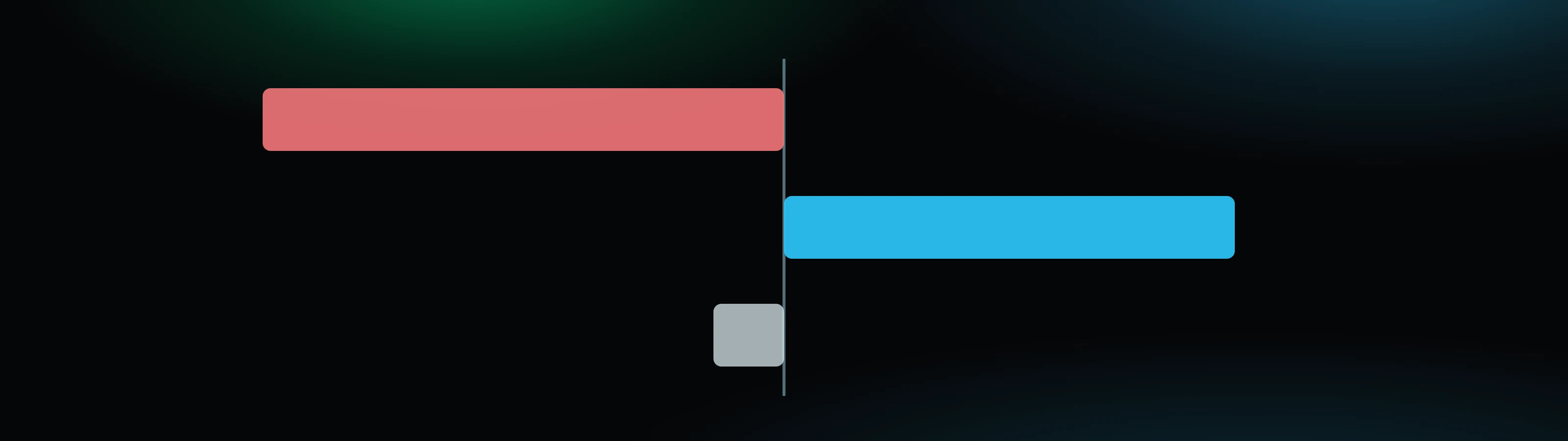
Here is a month that looks like nothing happened. Indigo Thread Co., the invented textile company we test Othor AI on, had net revenue of ₹4.62 Cr in October. In September it was ₹4.81 Cr. A drop of ₹0.19 Cr, about 4%: the kind of number a monthly review notes and moves past.
Underneath it, the South lost ₹1.4 Cr and the West gained ₹1.21 Cr. Two large moves, in opposite directions, almost cancelled out. The total is honest arithmetic, and it is still misleading.
01What the total hides
| Region | Change, September to October |
|---|---|
| South | −₹1.40 Cr |
| West | +₹1.21 Cr |
| The other regions | about nil |
| Total | −₹0.19 Cr |
Read the total and you learn the business is roughly steady. Read the regions and you learn two different stories: a serious problem in the South, and a strong month in the West that happened to arrive at the same time. Neither story is in the total. Both need someone to act, and they need different people.
02Why it happens so often
Totals are built to smooth. A company with several regions, products or channels rarely sees them all move together; some rise while others fall, and the total reports the difference. Most months that is fine, because the moves are small. The danger is the month when the moves are large and opposite: the offsetting gain makes the loss look small, sometimes invisible.
It is also the case a dashboard is worst at. A chart of the total shows a flat line. A chart by region shows the drop, but only if someone opens it, picks the right breakdown and looks at the right month. Nobody opens the breakdown of a number that looks fine.
03How Othor AI looks for it
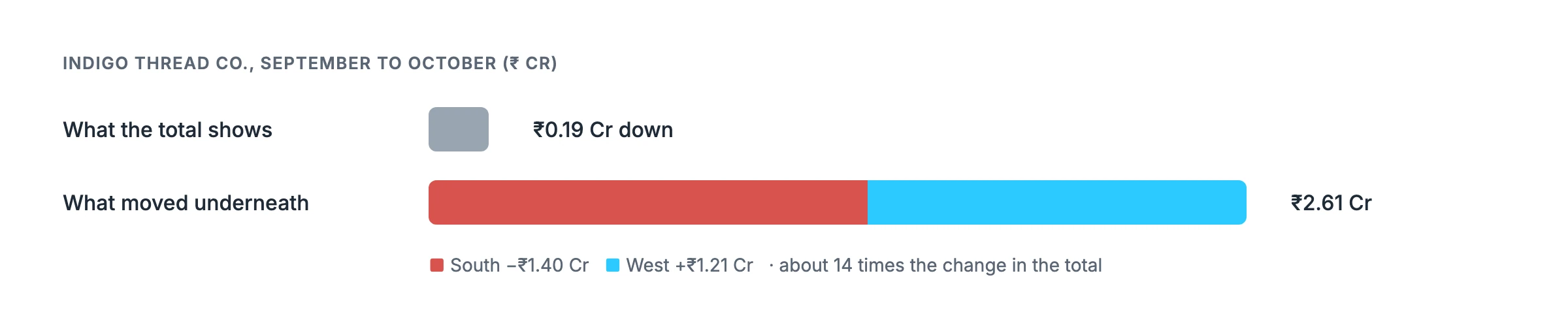
Every night, Othor AI splits each confirmed number by each of its breakdowns, and adds up how much each part moved. It calls the pattern "net hiding gross": the net change is small, but the gross moves underneath are large. It flags it when the parts that moved add up to at least three times the change in the total, and the biggest fall is large enough to matter to the business.

In October the parts moved ₹2.61 Cr between them (₹1.40 Cr down and ₹1.21 Cr up) against a total change of ₹0.19 Cr: about fourteen times. The rule is met many times over.
04Then it goes one level down
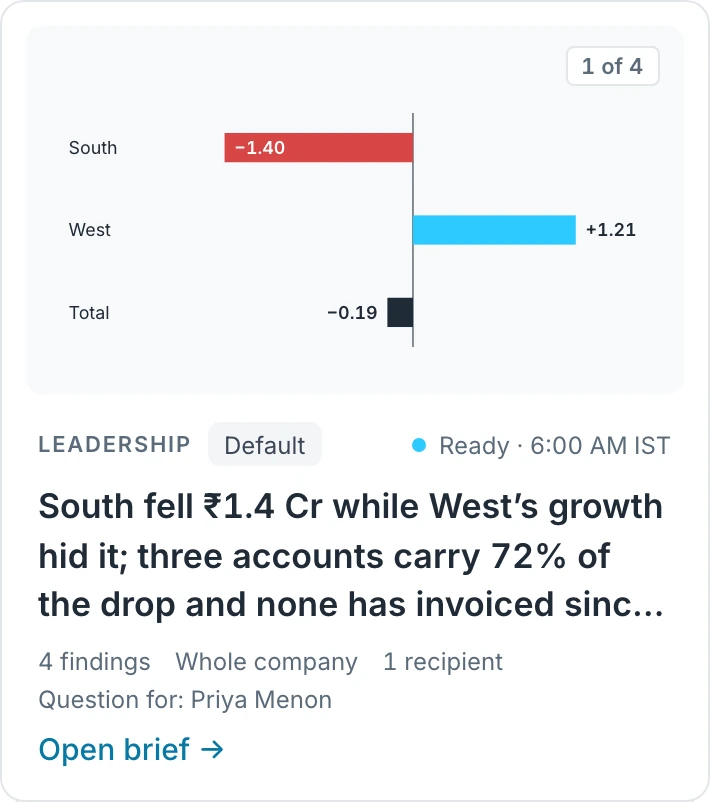
A region is still a summary. So the finding doesn't stop at "South fell". It looks at which customers carried the drop, and found that three accounts, Ravira Exports, Tessora EU and Skarfab, carry 72% of it, and that none of the three has invoiced since 9 October. One of them, Skarfab, is on a pause the owner had already told Othor AI about, running to 1 December, so the brief says so instead of raising it as news.
The Morning Brief's headline on 1 November read: "South fell ₹1.4 Cr while West's growth hid it; three accounts carry 72% of the drop and none has invoiced since 9 Oct." It ends with one question, for the person who owns those accounts.
05What to take from it
When a total is flat, ask what it is the difference between. A steady number is a claim that nothing changed, and it is only true if the parts are steady too. Othor AI checks every number that way, every night, so a quiet total never stands in for a quiet business.