
On the morning of 1 November, the sample company's Receivables brief carried this item: “Ravira Exports stopped invoicing on 9 Oct.” Under it, one more line: “The gap is measured. Why it happened can't be told from the data Othor AI reads.”
That second line is there on purpose. It is one of the most useful things a brief can say.
01Two different claims
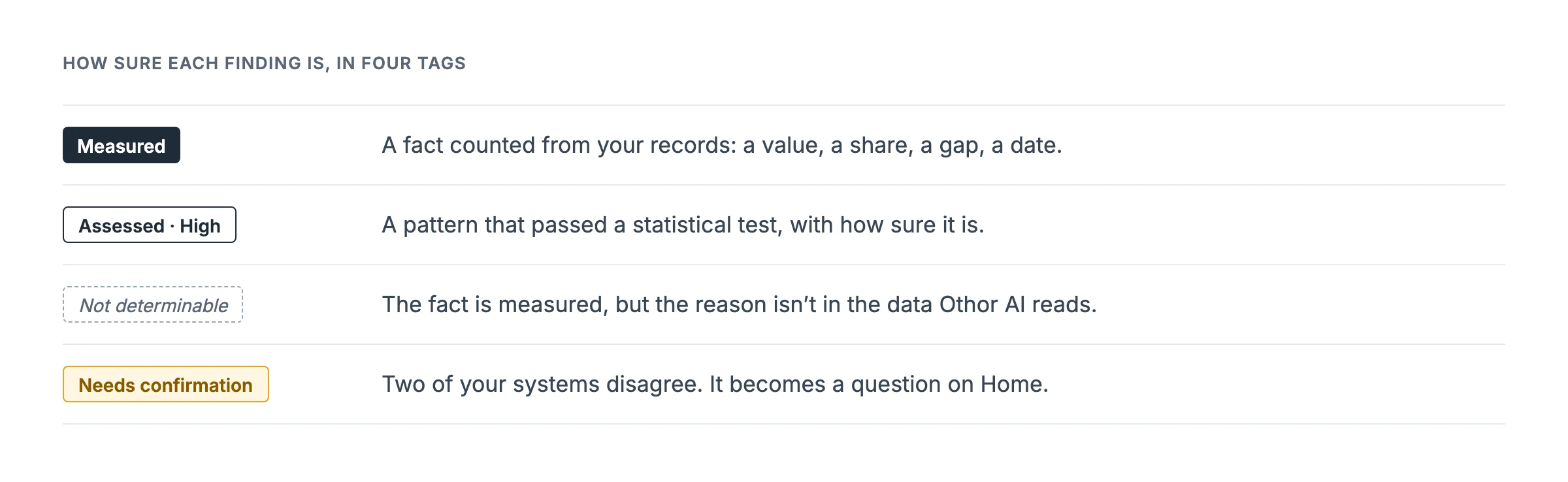
“Ravira Exports stopped invoicing on 9 October” is a fact, with ₹0.36 Cr at stake. It comes straight from the invoices: the last date, the amount, the days since. “Ravira moved its orders to a competitor” is an explanation. It might be true. It might also be a pause, a dispute, or a new company name on the bills. Nothing in the invoices can tell those apart.
So every item in a brief carries a tag that says which kind of claim it is.
02Why not let the AI fill the gap?
A language model would happily write a reason. It would sound right and read like a fact, and an owner might act on it. A confident wrong reason costs more than an honest gap: you call the wrong person, or you discount to win back a customer who was only on hold.
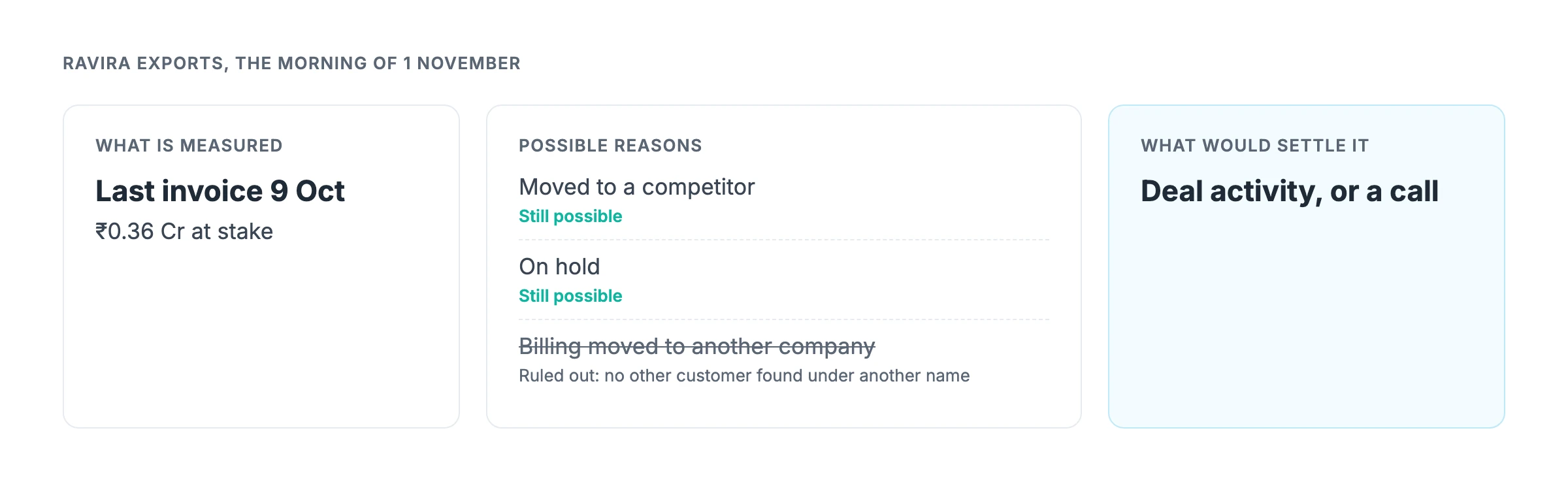
So Othor AI doesn't guess. For a customer who stops invoicing, it has a fixed list of possible reasons: moved to a competitor, on hold, or billing moved to another company. It rules out what your connected data can, and says what would settle the rest.
For Ravira Exports, it looked for the same customer being billed under another name, found none, and ruled that reason out. Two stayed possible: a competitor, or a pause. What would settle them was plain: deal activity, or a call.
03An honest gap becomes a question
A gap you can name is a gap you can close. The Leadership brief that morning ended with one question, for one person: Priya Menon, Head of Sales. “Have Tessora EU and Ravira Exports moved orders elsewhere, or are they on hold?” A two-minute call answers what no amount of data would.

The item stays in the brief and keeps its place in the ranking by money at stake. Not knowing why is never a reason to hide what happened.
04Why this matters
An owner reads a brief to decide what to do before the day starts. That only works if the brief is clear about what it knows, what it tested and what it can't see. Othor AI says all three, every morning, so you can trust the facts and spend your questions where they count.