How a $1 million competition to improve movie recommendations sparked a revolution in personalisation algorithms that now power everything from shopping to streaming.
01The Challenge That Demanded Innovation
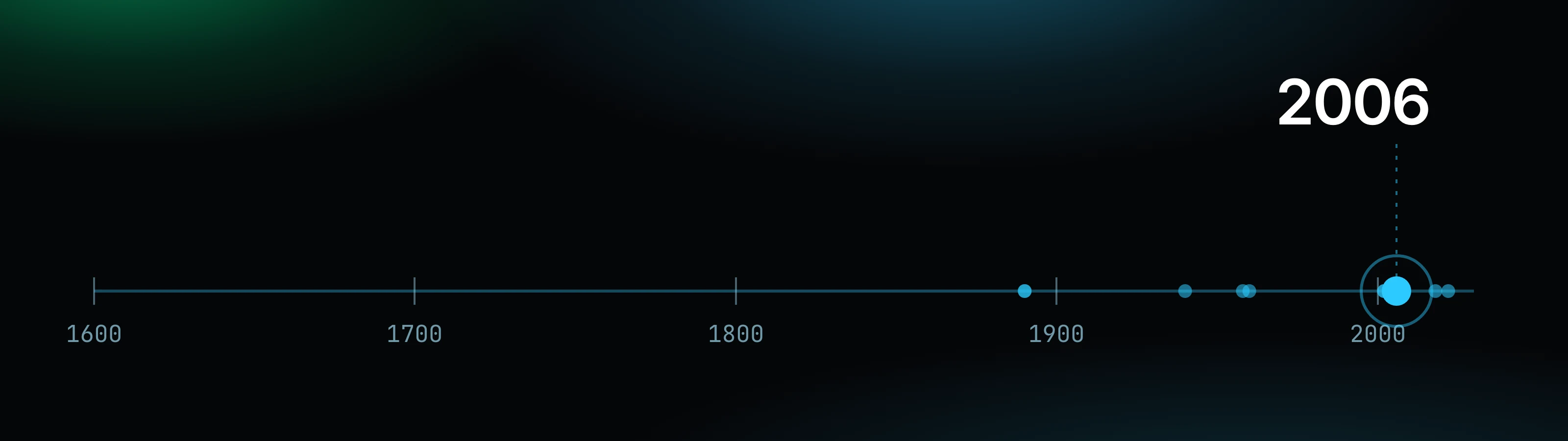
In 2006, Netflix still sent most of its films on DVDs by post, and was about to start streaming. Either way, its business depended on one thing: helping each subscriber find the next film they would enjoy, from a catalogue far larger than anyone could browse.
Its recommendation system, Cinematch, predicted the star rating a subscriber would give a film. Netflix measured it by its typical error, in stars: on the test set Netflix later used, Cinematch was off by about 0.95 of a star (a root mean squared error of 0.9525). For a company whose model depended on keeping subscribers month after month, every bit of that error mattered.
Rather than only hiring more engineers, Netflix decided to open the problem to the world. It became one of the most famous experiments in the history of business analytics.
02The Birth of Crowdsourced Analytics
On 2 October 2006, Netflix announced the Netflix Prize: $1 million to the first team that could cut Cinematch’s error by 10%. It released a dataset of more than 100 million ratings from about 480,000 subscribers on 17,770 films, with names removed. Few companies had ever shared data on that scale.
What made the approach work was the competition’s design. Teams anywhere could submit as often as they liked, and a public leaderboard showed which approaches were winning, so ideas spread and built on each other.
Progress came fast. Within a week, a team had beaten Cinematch. A year in, the leading team, BellKor, had cut the error by 8.43% and won the first $50,000 Progress Prize.
The last stretch was the hardest. On 26 June 2009, a merged team called BellKor’s Pragmatic Chaos crossed the 10% line, which opened a final 30 days for anyone to beat it. A rival coalition, The Ensemble, matched the result on the hidden test set; the prize went to BellKor’s Pragmatic Chaos because it had submitted 20 minutes earlier. Netflix awarded it on 21 September 2009 (The New York Times). The winning solution blended hundreds of models into one.
03The Personalization Revolution
The Netflix Prize didn’t just improve film recommendations. It changed how people build systems that predict what someone will like. Three lessons from the winning work still shape recommendation today:
What people choose says as much as what they rate: the winners found that which films a person chose to rate at all, regardless of the stars they gave, carried real information about their taste.
Tastes and habits drift over time: a person’s ratings shift over months, and even on a single day; films’ popularity rises and fades. Modelling that drift was one of the most useful ideas of the competition.
A blend beats any single method: the winning solution combined many models, most of them finding hidden “factors” of taste from the pattern of ratings across all users (matrix factorisation), with others that compared similar users and similar films. No single approach came close on its own.
04From Netflix to Modern Recommendation Engines
What began as a quest to improve film suggestions shaped the personalisation that now runs much of the digital economy. The methods made popular by the Netflix Prize spread far beyond entertainment: shops recommend products, news apps rank stories, and music services build playlists in much the same way.
Netflix itself moved on, too. In 2012 its engineers explained that it had put two of the prize’s methods into production, but not the full winning blend: the extra accuracy did not justify the engineering effort, and by then streaming gave Netflix far richer signals than star ratings (the Netflix Tech Blog).
05The Lessons for Modern Business
Open problems attract talent: by sharing its data and its problem with the world, Netflix drew thousands of teams into work it could never have staffed itself.
The measure shapes the work: the prize rewarded one number, the error on held-out ratings. Teams optimised exactly that, and the business later found that the last few points of it were not worth their cost. Choose the measure that matters to the decision.
Removing names is not the same as anonymity: weeks after the data came out, two researchers began to show that some subscribers in the “anonymous” dataset could be identified by matching their ratings with public reviews elsewhere (Narayanan and Shmatikov). After a lawsuit and questions from the US Federal Trade Commission, Netflix cancelled a planned second prize in 2010.
06The Continuing Evolution
The Netflix Prize teaches that recommendation is not only about efficiency but about possibility: helping people find what they would not have found alone. It also teaches that more accuracy on one number is not the same as a better business, and that data about people carries a duty of care.
Today, as businesses try to understand ever more complicated customer journeys, both halves of that legacy matter: the power of learning from behaviour, and the limits on what should be learnt.
07Sources
- James Bennett and Stan Lanning, “The Netflix Prize”, Proceedings of KDD Cup and Workshop, 2007.
- Yehuda Koren, “The BellKor Solution to the Netflix Grand Prize”, 2009.
- Steve Lohr, “Netflix Awards $1 Million Prize and Starts a New Contest”, The New York Times, 21 September 2009.
- Xavier Amatriain and Justin Basilico, “Netflix Recommendations: Beyond the 5 stars”, Netflix Tech Blog, April 2012.
- Arvind Narayanan and Vitaly Shmatikov, “Robust De-anonymization of Large Sparse Datasets”, 2006–2008.
First published on blog.othor.ai, 19 May 2025; revised 23 Nov 2026.