How a retailer’s discovery about storm shopping showed what store-level data could reveal, and set a pattern for predictive analytics.
01The Challenge That Forced Innovation
From the 1980s, Walmart faced a basic retail challenge at a scale few had seen. With a fast-growing chain of stores, each carrying tens of thousands of products, managing stock by experience and intuition led to empty shelves where customers wanted to buy, and warehouses full of what nobody wanted.
This wasn’t just frustrating; in a fiercely competitive industry it was dangerous. Every empty shelf was a lost sale, and every overstocked item tied up money and space that could be used elsewhere.
Walmart’s leaders saw that the retailer that knew best what was selling, where and when, would have a lasting advantage.
02The Birth of Data-Driven Retail
In 1987, Walmart completed a private satellite network linking its stores to headquarters, reported to have cost $24 million: an unusual use of technology in retail at the time.
The network carried something new: each store’s sales, item by item, back to the centre, where they built up into one of the largest commercial databases in the world. A retailer could see what was selling where, when, and under what conditions.
The value came when Walmart began to analyse what it had collected. Its analysts found patterns that ordinary retail wisdom would not have guessed, and one became famous.
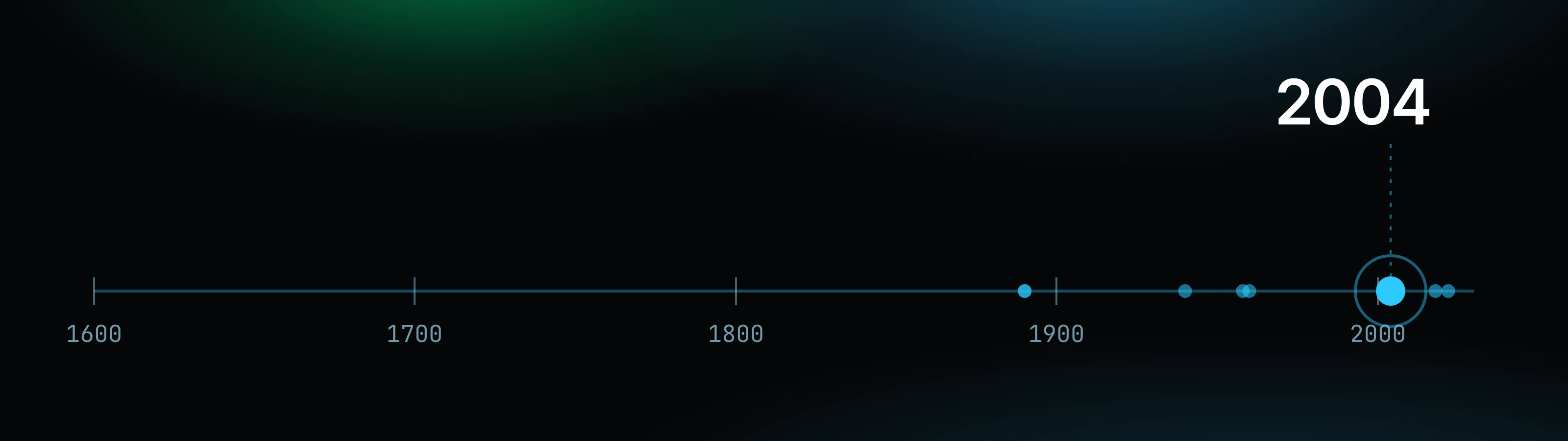
In 2004, as Hurricane Frances moved towards Florida, Walmart’s chief information officer, Linda Dillman, asked her team to look at what had sold in the days before an earlier storm. The New York Times reported what they found: “We didn’t know in the past that strawberry Pop-Tarts increase in sales, like seven times their normal sales rate, ahead of a hurricane,” Dillman said. The top-selling item before a storm was beer. Trucks carrying both were sent to the stores in Frances’s path.
What began as a curious finding became part of Walmart’s storm playbook, alongside the obvious torches and batteries. More importantly, it showed that data could reveal what customers needed, even things the customers themselves might not have thought to say.
03The Supply Chain Intelligence Legacy
Walmart’s approach didn’t just improve its stock-keeping; it changed how businesses think about customer behaviour. The principles it showed still define supply chain intelligence:
Data reveals hidden patterns in customer behavior: where retail wisdom looked for the obvious links, analysis turned up surprising ones, and some of them were worth money.
Predictive analytics enables proactive operations: retail had been mostly reactive. With enough history, a business could prepare for demand before it arrived.
Supply chain optimization creates compounding advantages: fewer empty shelves and less excess stock at the same time made the whole operation cheaper to run, which helped Walmart keep its prices low.
04From Walmart to Modern Predictive Analytics
Walmart’s early work grew into the forecasting that many businesses now rely on. Where it began with simple links, like a storm and a snack, today’s forecasts combine many more inputs, from seasons and promotions to the weather.
The scale has grown dramatically too: what was one of the world’s largest databases in 2004 would not stand out today.
Yet the principle remains the same: learn from past patterns to prepare for what comes next, and act on it.
05The Lessons for Modern Business
Data is worthless without analysis: Walmart’s advantage came not from collecting data (others could too), but from analysing it and acting on what it found.
Counterintuitive insights often create the greatest value: the Pop-Tarts finding mattered because it wasn’t obvious. But a surprising pattern should be checked before it is trusted, because many surprising patterns turn out to be chance.
Predictive analytics requires organizational commitment: Walmart’s success came not just from finding patterns, but from a supply chain that could act on them in time.
06The Continuing Evolution
The Walmart story teaches us that predictive analytics isn’t just about technology; it’s about connecting data to action. Faced with complicated customer behaviour, the answer often lies in finding the patterns that matter most, and building the habit of acting on them.
Its legacy lives on wherever a business turns what its customers did yesterday into what it does tomorrow. The same power, used to learn something far more personal about a customer, is the story of Target’s pregnancy prediction.
First published on blog.othor.ai, 12 May 2025; revised 23 Nov 2026.