How American Airlines’ reservation system of the 1960s changed business operations, and laid the groundwork for real-time analytics.
01The Crisis That Demanded Innovation
In the 1950s, American Airlines faced an operational nightmare. As air travel grew, its manual reservation system was buckling. Agents tracked seats on cards and boards, checking availability by hand and by telephone, and by IBM’s account a single reservation could take up to 90 minutes to handle. It was slow, labour-intensive and prone to errors: flights sold seats they didn’t have, and left seats empty that they could have sold.
As passenger numbers kept rising, American’s executives saw the danger: if they couldn’t manage reservations efficiently, they couldn’t compete.
Enter a chance encounter that would change not just air travel, but the whole idea of running a business in real time.
02The Birth of Computerized Business Intelligence
In 1953, on a flight from Los Angeles to New York, American Airlines president C. R. Smith sat next to an IBM salesman, R. Blair Smith. What began as small talk between two men who shared a surname became a conversation about American’s reservation problem, and about whether a computer could keep track of every seat, as it was sold, across the whole airline.
The answer took years to build. The system, SABRE (the name was later read as “Semi-Automated Business Research Environment”), ran on two IBM 7090 mainframes in Briarcliff Manor, New York. Its development is usually reported to have cost about $40 million: a large bet on what computers could do for a business.
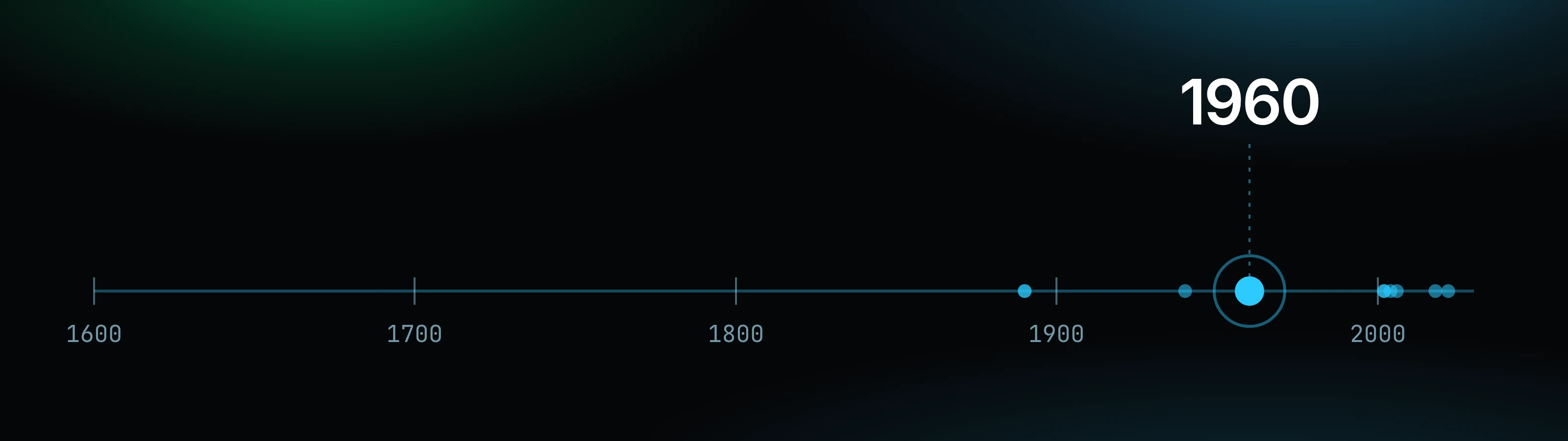
The results were extraordinary. After trials from 1960, SABRE was handling all of American’s reservations by 1964. What had taken an hour or more now took seconds, and, by IBM’s account, the system could process 7,500 reservations an hour. A company had put computing at the centre of its customer-facing operation, in real time.
03The Business Intelligence Legacy
SABRE didn’t merely improve American Airlines’ reservations; it showed a new way for a business to use data for advantage. The principles it established still define business intelligence:
Real-time data enables real-time decisions: before SABRE, business reports were history. SABRE showed that access to current data could make decisions forward-looking instead of reactive.
Centralized information creates organizational alignment: by giving every reservation agent in the country the same information at the same moment, SABRE removed the gaps between offices and made operations consistent nationwide.
Technology can redefine customer experience: SABRE turned a slow, frustrating booking into a quick one, and showed that technology could make customers happier, not just make work cheaper.
04From SABRE to Modern Business Intelligence
SABRE’s evolution mirrors the development of business intelligence itself. In 1976, American put SABRE terminals in travel agencies, so agents could book directly. In 1985, easySABRE let people with a home computer look up and book flights themselves through online services such as CompuServe: one of the first online transaction systems for consumers.
SABRE began with one airline’s seats. Business intelligence today draws on many systems at once, from sales and stock to payments and customers.
Yet the principle remains the same: the right information, to the right people, at the right time, to make better decisions.
05The Lessons for Modern Business
Bold technology investments create market leaders: American Airlines’ investment in SABRE was unprecedented, and it helped keep the airline at the front of its industry for decades.
Transformative innovation often comes from cross-industry collaboration: an airline and a computer company built together what neither could have built alone.
Real-time systems create value: SABRE showed that data is worth most when it is current, the principle behind every daily report that arrives before the working day starts.
06The Continuing Revolution
The SABRE story teaches us that business intelligence isn’t just about technology; it’s about what becomes possible when data is there the moment it’s needed. Faced with overwhelming operational problems, the answer often lies not in small improvements, but in rethinking how information flows through an organisation.
SABRE’s legacy lives on in every system that turns the day’s activity into something people can act on while it still matters. The next chapter of this history found its patterns in shoppers: Walmart and the strawberry Pop-Tarts.
First published on blog.othor.ai, 5 May 2025; revised 23 Nov 2026.