How conversational AI changed the way people ask questions of data, what it made easier, and what it did not change: whether the numbers are right.
01The Journey to Conversational Intelligence
This history of business intelligence began with Herman Hollerith’s punch cards counting the 1890 US census, and went on through Alan Turing’s work on the Enigma code, American Airlines’ SABRE booking system, Walmart’s Pop-Tarts and hurricanes, Netflix’s million-dollar algorithm and Moneyball’s challenge to a century of baseball habit. It took in Target’s pregnancy prediction, which crossed an ethical line, Cambridge Analytica, which used data against voters, and the COVID-19 dashboards, which taught the world to read charts. Each step made data more useful to more people. Then came a step that changed how people ask.
02The Breakthrough That Changed Everything
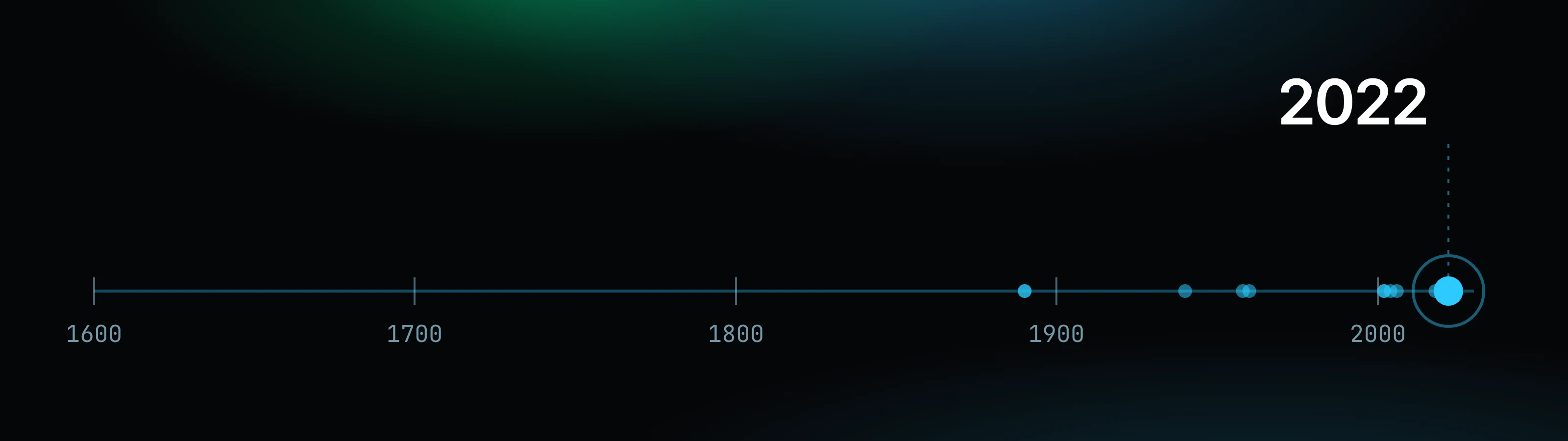
On 30 November 2022, OpenAI released ChatGPT to the public. Within five days it had a million users, according to OpenAI’s chief executive. Within two months, by one analysts’ estimate, it had 100 million monthly users, which the analysts called the fastest growth of any consumer application (Reuters, 1 February 2023). Its impact went far beyond consumers: it made ordinary language a way to work with computers, data included.
For decades, business intelligence had needed special skills. Analysts learnt SQL to query databases, built dashboards and translated business questions into technical requests. The answers stayed behind a barrier that only a few trained people could cross.
ChatGPT lowered that barrier dramatically. Suddenly a question could be typed the way you would ask a colleague, and an answer came back in plain words.
That was a real change: the interface to data became language. But it left the hardest question open: is the answer right?
03The Evolution Toward Conversational Analytics
The road to conversational business intelligence started long before ChatGPT. Search engines had taught people to expect instant answers. Voice assistants such as Siri and Alexa had made spoken requests normal. The pandemic dashboards had made millions of people comfortable with data.
Earlier attempts at asking data questions in plain language were limited. They could answer “What were sales last quarter?” but struggled with “Why did our cost of winning a customer rise in the north, and what might be behind it?”
Large language models were far better at understanding context, coping with vague wording and following a conversation over several questions. People could ask a follow-up, ask for a clarification, and follow a thread, much as they would with an analyst.
But a language model is built to produce likely words, not to count. Asked about a company’s data, it can write a query, and it can also state a number that sounds right and isn’t. The fluency that made it easy to use also made its mistakes easy to believe.
04The Democratization Revolution
Within months of ChatGPT’s release, businesses in every industry began trying conversational AI in their analytics work, hoping to open data to everyone:
Executives hoped to ask their own questions, such as “What’s driving our rise in cancellations?”, instead of waiting for an analyst’s report.
Sales teams wanted to ask which deals in their pipeline were most likely to close this quarter.
Operations managers wanted to ask why output was lower on Tuesdays, or which maintenance patterns came before breakdowns.
Customer service teams wanted to see patterns in complaints and resolution times without a report request.
The questions were the right ones. Whether the answers could be trusted depended on how the system was built.
05The Technical Revolution Behind the Scenes
Behind the simple conversation sits decades of work in artificial intelligence, language processing and data engineering.
Large language models learnt to understand intent and nuance in human language, and to translate a business question into a technical one, such as a database query.
Integration tools connected these models to company databases and systems, so that a question in plain language could reach live data.
And the builders learnt where the model belongs. The systems that hold up keep the model to what it is good at, understanding the question and writing the words, and leave the numbers to code: a query or a calculation that gives the same answer every time and can be checked. That is the line Othor AI draws: every number is computed by code from the company’s own data and shows how it was calculated, and an AI model only drafts the wording.
06From Business Intelligence to Business Conversation
ChatGPT changed business intelligence from a formal process into something closer to a conversation. The old pattern was request, analysis, report, presentation, decision. A conversation lets people follow a thread: ask “why?”, ask “what if?”, test an idea and move on.
It also made analysis more social. Teams could share a line of questions and build on each other’s.
And it raised the stakes on trust. Early users worried, rightly, about made-up figures. The better systems answered by showing their working: which data was used, how the figure was calculated, how sure it is. People learnt to treat a fluent answer as a starting point and to check the numbers that would drive a decision.
07The Future of Data Interaction
Looking back over this history, from Hollerith’s punch cards to conversational AI, the direction is clear: data has become steadily easier for more people to use.
Each step solved one problem. Hollerith automated counting, Turing found hidden patterns, Walmart predicted demand, Netflix personalised, Moneyball questioned the old measures, Target raised ethical questions, Cambridge Analytica forced a regulatory response, and the COVID-19 dashboards taught the public to read data.
Conversational AI solved the problem of asking. The problem of knowing which numbers to trust, and which of them matter, is still the work.
08The Lessons for Modern Business
Accessibility drives adoption: powerful tools become truly valuable when everyone who needs them can use them, not only specialists.
Language is a great interface, not a calculator: let people ask in their own words, and let code produce the numbers.
Every figure should show its working: when anyone can ask, everyone needs to see where an answer came from.
People and AI together: the best results combine human curiosity and judgment with machines that are fast and consistent.
09The Continuing Evolution
The ChatGPT moment showed that the aim of business intelligence was never more dashboards or cleverer algorithms. It was to make answers about the business as easy to get as asking a question. Conversational AI made the asking easy.
The organisations that benefit most will be those that pair that ease with numbers they can trust: computed, tested and traceable. The data detectives of tomorrow won’t need technical training. They will need curiosity, good questions, and answers that show their working.
10Sources
- OpenAI, “Introducing ChatGPT”, 30 November 2022.
- Krystal Hu, “ChatGPT sets record for fastest-growing user base: analyst note”, Reuters, 1 February 2023.
First published on blog.othor.ai, 23 Jun 2025; revised 23 Nov 2026.