In our journey through the history of decision intelligence, we’ve explored the mathematical frameworks that changed how we approach complex decisions: Kantorovich’s linear programming, the Berlin Airlift, Dantzig’s simplex method, von Neumann’s duality, Koopmans’ equilibrium theory, Bellman’s dynamic programming, Simon’s bounded rationality and stochastic programming’s handling of uncertainty. Yet a critical step remained: how would these ideas become tools that business leaders and policymakers could actually use?
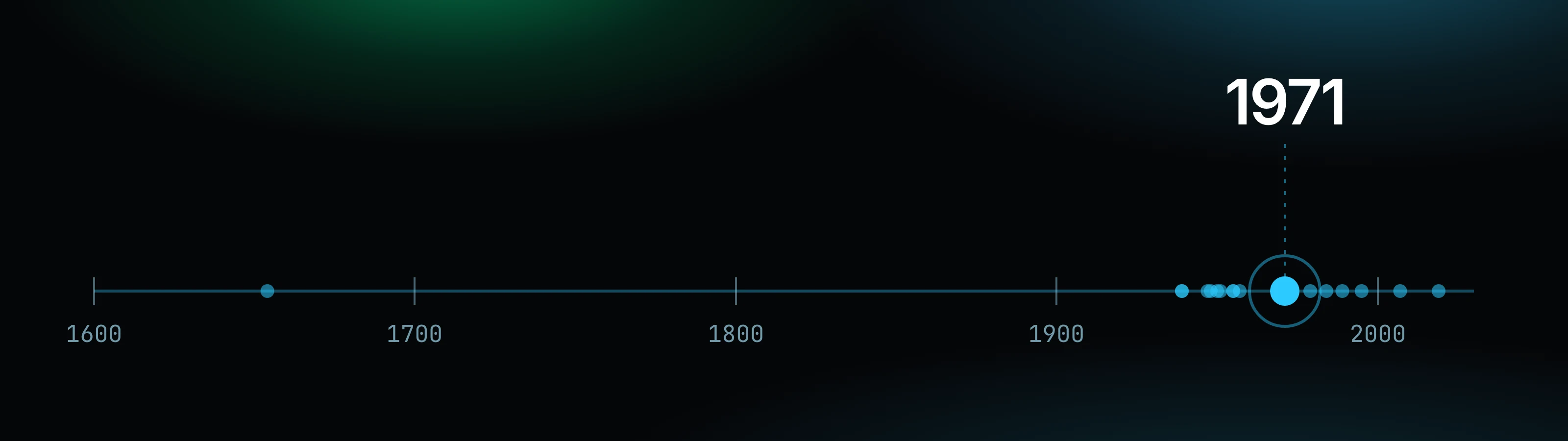
That step happened from the 1960s to the 1980s, with the development of Decision Support Systems (DSS): the bridge between abstract mathematics and everyday decisions. This was when decision intelligence entered the mainstream of organisations, and it changed how leaders approach complex problems.
01From Mathematical Abstraction to Executive Desktop
When the first commercial computers arrived in the 1950s, they were used mainly for transactions and accounting. The idea that these machines could support strategic decisions was not obvious. Most executives saw computers as tools for their technical staff, not as instruments they would use themselves.
A shift began in the mid-1960s. Michael S. Scott Morton, then a doctoral student at Harvard Business School, built and studied an interactive planning system that a manager used directly at a screen; his 1967 thesis, later the book Management Decision Systems (1971), and his work at MIT’s Sloan School afterwards laid the foundation of the field. In 1971, he and G. Anthony Gorry gave it its name: in “A Framework for Management Information Systems” they called computer systems that support semi-structured and unstructured decisions “decision support systems”.
Scott Morton recognised that while the optimization techniques we’ve explored were powerful, they needed to sit inside systems that:
- Supported, rather than replaced, the manager’s judgment
- Helped the decision-maker understand the problem better
- Could be used without mathematical expertise
- Combined numbers from models with insight that isn’t in the numbers
This was a real change of philosophy. Instead of chasing fully automated decisions without human judgment, which many early computer scientists had imagined, the DSS movement chose a partnership between people and computers that strengthened what people could do.
02The Key Pioneers Who Bridged Theory and Practice
The field grew from the work of several people at the meeting point of management science, computer science and the study of organisations:
Peter G.W. Keen worked with Scott Morton to set out the idea in their influential 1978 book, Decision Support Systems: An Organizational Perspective. Keen stressed that a DSS succeeds only if it fits how people and organisations actually decide, not just its technical parts.
Steven Alter studied dozens of real systems in his 1975 MIT doctoral thesis and sorted them into types, published in 1980 as Decision Support Systems: Current Practice and Continuing Challenges. His taxonomy made clear that different decisions need different kinds of support.
Ralph Sprague set out his framework in 1980, describing a DSS as three parts: the dialogue (the user interface), the data and the models. It still shapes how such systems are designed.
John F. Rockart introduced “critical success factors”: the handful of things a leader must get right, and so the handful of numbers they most need to see. His work led to executive information systems for senior leaders.
Through their work, decision support grew from an academic idea into a management tool, and by the early 1980s it was part of practice in many forward-looking organisations.
03The Corporate Strategy Application
To see what early DSS changed, consider the kind of problem they were built for: planning refinery production in an oil company.
The planners face crude oil prices that move, demand for products that changes, refinery capacities that differ and transport that has limits. Linear programming models could in principle find the best production plan, but on their own they were:
- Too complex for non-technical executives to understand
- Slow to update when conditions changed
- Hard to combine with the manager’s judgment and market knowledge
- Cut off from how the organisation actually worked
A decision support system wrapped such a model in something managers could use. It:
- Spoke in business terms rather than mathematical ones
- Let planners try a new scenario quickly when the market moved
- Let executives override the model where they knew something it didn’t
- Brought together data from several parts of the company
- Explained and showed its results, so people could trust them
This is why DSS were such a step forward: they made the mathematics usable by the people who actually decide, not only by researchers.
04The Public Sector Applications
Decision support also reached public policy. Think of a city government dividing limited money between transit, affordable housing, health facilities and schools. The difficulty is real:
- Many groups with conflicting priorities
- Uncertain long-term effects of each choice
- Policies that affect each other
- Politics alongside the technical questions
- Far more relevant data than anyone can read
A decision support system for this kind of problem can:
- Map where people live and which services they need
- Model what different investment plans would do
- Help many groups decide together
- Record why each decision was made, so it can be held to account
- Combine numbers from models with what communities say
Such systems don’t remove politics from the decision, and they shouldn’t. What they can do is make sure the political argument is informed by the best evidence and analysis available, and that the reasons for a decision are written down where people can see them.
05The Technological Evolution: From Mainframes to Personal Computing
The story of decision support is tied to the story of computing. Early systems in the 1960s ran on mainframes with little interaction; users often submitted a request and got a printout hours later.
The technology moved through several phases:
1. Time-sharing systems (1960s): mainframes shared between many users at once, with limited power and simple interfaces.
2. Minicomputers (1970s): smaller dedicated machines brought decision support into departments and business units, closer to the people deciding.
3. Personal computers (early 1980s): spreadsheets such as VisiCalc (1979) and then Lotus 1-2-3 (1983) put modelling directly in managers’ hands. Decision support was no longer only for technical specialists.
4. Client-server systems (late 1980s): central servers for the heavy computing, personal computers for the interface, so models could grow while staying easy to use.
Each step widened what decision support could do, and each brought new problems of design, data and fit with the organisation.
06The Components That Made DSS Work
Early systems differed widely, but Sprague, Alter and others found the same parts in the ones that worked:
1. Data management: flexible ways to store and reach data from many sources, designed for analysis rather than for recording transactions.
2. Model management: the mathematical and statistical models had to be organised, kept and run efficiently.
3. Dialogue management: interfaces that non-technical people could use, work that fed into the wider field of human-computer interaction.
4. Knowledge: later systems added expert systems and business rules, for know-how that doesn’t fit a mathematical model.
These parts began as separate pieces and grew into more integrated environments as the technology matured.
07The Organizational Impact: Culture, Processes, and Skills
Perhaps the deepest effect of decision support was not technical but organisational. Using these systems well required, and encouraged, changes in how organisations decided:
New roles appeared: specialists who bridged what the systems could do and what the business needed, forerunners of today’s analysts and data scientists.
Decisions became more structured: assumptions were written down, and the factors behind a choice made clear.
Data gained strategic value: as decisions based on data proved their worth, organisations began to treat information as an asset rather than a by-product of operations.
Leaders needed analytical literacy: executives had to understand analytical ideas, even if others ran the analysis.
08From Group DSS to Executive Information Systems
Through the 1980s, the idea branched to fit different kinds of decision:
Group decision support systems extended it to decisions made together, with tools for generating ideas, combining preferences and reaching agreement. Jay Nunamaker and colleagues at the University of Arizona were among the pioneers.
Executive information systems served senior leaders: a few key numbers, exceptions flagged, and the detail behind them a click away. They grew from Rockart’s work at MIT on what executives need to see.
Spatial decision support systems joined maps and geographic data with decision models, for problems from choosing a shop’s site to managing natural resources.
Each was the same philosophy adapted to a different setting.
09Failures and Limitations: The Reality Check
Many early systems did not deliver what they promised. Their failures still teach decision intelligence today:
Technology ran ahead of the organisation: advanced systems were bought without the changes in culture and process needed to use them.
“Black box” models lost trust: when a system couldn’t explain its reasoning, people went back to intuition, however accurate the model was.
Poor data undermined credibility: precise-looking recommendations built on incomplete or wrong data led to costly decisions and lost trust.
Rigid systems couldn’t adapt: models built for the conditions of their day failed as the business changed.
A typical story: a system recommends stock levels that experienced regional managers can’t square with what they know of their markets, and it can’t explain itself in business terms, so they stop using it. The mathematics was not the problem; the missing explanation and local knowledge were.
None of this made decision support less important. It showed that people and organisations matter as much as the technology.
10The Legacy for Modern Decision Intelligence
Today’s decision intelligence builds directly on these early systems. The technology has changed enormously, but the core principles are much the same:
1. People and computers together: the best results still come from human judgment working with computation, not from trying to automate decisions entirely.
2. Models and data together: data from many sources and analytical models are still brought together, at far greater scale.
3. Exploring, not just reporting: letting decision-makers try scenarios, test assumptions and see what matters is still central.
4. Fitting the organisation: success still depends on processes, culture and skills, not technical sophistication alone.
What has changed is the setting:
- Plenty of data, where early systems had little
- Cloud computing, with almost unlimited computing power
- Machine learning that finds patterns people would miss
- Charts that make complex relationships easy to see
- Access from anywhere, built into daily work
These open doors the pioneers could only imagine, but the challenges they named (weighing analysis against intuition, combining different views, explaining models and adapting to change) are still the heart of the field.
11Conclusion: The Human-Technology Partnership
The development of decision support systems from the 1960s to the 1980s is a crucial chapter in this history. The mathematics came first; decision support made it practical for organisations everywhere.
The most lasting lesson of the era is that good decisions come from a partnership between human judgment and computing. The DSS pioneers rejected both the dream of fully automated decisions and the old resistance to computers, and found a middle path: technology that strengthens judgment without trying to replace it.
The next time you open a business intelligence dashboard, run a scenario or read a recommendation from a system, remember that you are using ideas that began decades ago, when Scott Morton, Keen, Alter, Sprague and others showed how theory could become everyday decision support.
12References
- Gorry, G. A., & Scott Morton, M. S. (1971). A framework for management information systems. Sloan Management Review, 13(1), 55–70.
- Scott Morton, M. S. (1971). Management decision systems: Computer-based support for decision making. Harvard University.
- Keen, P. G. W., & Scott Morton, M. S. (1978). Decision support systems: An organizational perspective. Addison-Wesley.
- Sprague, R. H. (1980). A framework for the development of decision support systems. MIS Quarterly, 4(4), 1–26.
- Alter, S. L. (1980). Decision support systems: Current practice and continuing challenges. Addison-Wesley.
- Rockart, J. F. (1979). Chief executives define their own data needs. Harvard Business Review, 57(2), 81–93.
- Shim, J. P., Warkentin, M., Courtney, J. F., Power, D. J., Sharda, R., & Carlsson, C. (2002). Past, present, and future of decision support technology. Decision Support Systems, 33(2), 111–126.
First published on blog.othor.ai, 13 May 2025; revised 23 Nov 2026.