Earlier in this history we met Kantorovich’s linear programming, von Neumann’s duality and the planning feat of the Berlin Airlift. One more figure turned these tools into a way of thinking about whole economies: Tjalling Charles Koopmans.
01The Economic Mind Behind Optimization Theory
When Koopmans shared the 1975 Nobel Prize in Economic Sciences with Kantorovich, “for their contributions to the theory of optimum allocation of resources”, it was not a coincidence of timing. Working apart, one in the Soviet Union and one in the United States, the two had arrived at complementary insights that became part of the bedrock of decision intelligence.
Koopmans, born in the Netherlands in 1910, trained as a physicist before turning to economics and statistics. He even gave the field its name: it was Koopmans who suggested the term “linear programming” to George Dantzig in 1948.
02Transportation and the “Assignment Problem”
Koopmans’ path to optimization began with ships. During the Second World War he worked for the Combined Shipping Adjustment Board, which coordinated Allied merchant shipping, and he studied how to route ships so that cargo moved with the fewest empty voyages.
That work became his paper on the optimum use of a transportation system (published in 1949): given supplies at some ports and needs at others, find the shipments that meet every need at the lowest total cost. Frank Hitchcock had stated the same problem in 1941; Koopmans added the economic reading of its solution, including the prices it implies at each port.
This seemingly specialised problem became a template for many others:
- Assigning people to tasks (the assignment problem, a special case solved efficiently by Harold Kuhn in 1955)
- Scheduling production (machines to production runs)
- Project planning (resources to project phases)
- Distribution (warehouses to customers)
Modern workforce scheduling in hospitals, call centres and shops still uses descendants of these models, treating shifts, skills and preferences as parts of one large assignment problem.
03The Activity Analysis Revolution
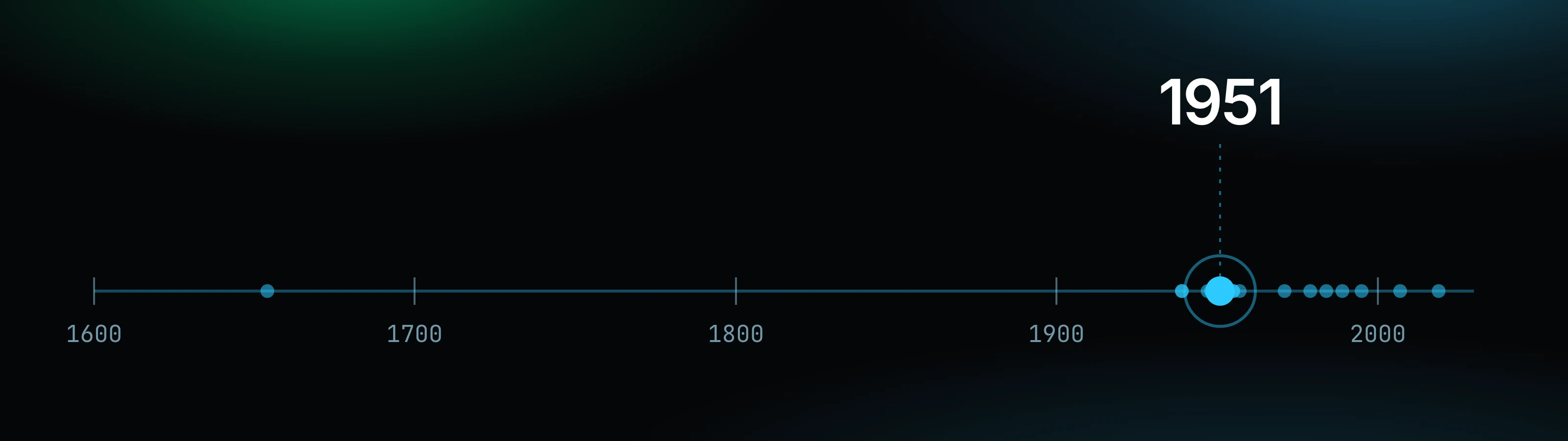
In 1951, Koopmans edited Activity Analysis of Production and Allocation, the proceedings of a 1949 Cowles Commission conference that brought together the new linear programming and economics. His own chapter set out the idea at its heart: production can be seen as a set of “activities”, each turning certain inputs into certain outputs at a fixed rate, and a plan is a choice of how much of each activity to run.
Kantorovich had developed the mathematics; Koopmans gave it an economic reading that made it indispensable for practical decisions. Each activity is a decision alternative, and the economy’s choices become a problem that can be written down and solved.
04General Equilibrium: Beyond Isolated Optimization
Koopmans’ deepest contribution was to connect optimization with prices. He showed that for an efficient production plan there is a set of prices (“efficiency prices”) at which every activity in the plan just breaks even and no unused activity would make a profit. Those prices are the dual variables of the optimization.
Three ideas follow:
- Many seemingly separate optimization problems are connected through the resources they share
- Prices can be read as the value of each resource in the plan for the whole system
- Under the right conditions, decision-makers who each respond only to those prices can together reach the efficient plan
The last point matters most for modern decision intelligence. With the right information, often in the form of prices, separate decision-makers can reach outcomes that would otherwise need impossibly complex central calculation. (The proof that a full market economy has such an equilibrium at all came from Kenneth Arrow and Gérard Debreu in 1954.)
05The Corporate Strategy Example
To see what this means in practice, picture a global manufacturer whose divisions each optimize locally:
- Procurement in India chooses suppliers on cost and quality
- A plant in Vietnam tunes its processes for efficiency
- Logistics in Singapore plans routes for time and cost
- Sales in Europe sets prices for growth and profit
Treated separately, each division can do well for itself and still hurt the whole. Koopmans’ idea suggests another way: set internal prices for shared resources (plant capacity, scarce parts, logistics slots) that reflect what each is worth to the whole company, the dual values of a company-wide plan. If a shared part becomes scarce, its internal price rises, and each division adjusts on its own, moving scarce capacity to where it earns most, without a stream of central orders.
06The Public Sector Applications
The same idea applies to cities. Consider a city government running connected services:
- Public transport (routes, frequency, capacity)
- Health facilities and their resources
- Schools and their programmes
- Emergency services and response
Optimizing each in isolation misses how they affect one another. Measures that act as “shadow prices” for shared resources, such as road space or staff time, can help departments see when spending in one area saves more in another: transport changes that cut emergency response times, or programmes in one service that reduce demand on another.
07Input-Output Analysis: The Interconnected Economy
Wassily Leontief’s input-output tables described how goods flow between industries. The activity-analysis view, which Koopmans’ volume helped establish, made such descriptions a basis for choice: not only how industries depend on each other, but which production levels would be efficient.
That systems view is useful in today’s connected economy, where supply-chain models trace how a disruption in one place spreads through a network of suppliers and where alternative sourcing would help most.
08The Mathematical Legacy: Complementarity and Existence
Koopmans’ efficiency prices are closely tied to complementarity: a resource that is not fully used has a price of zero, and an activity that is not used would not break even at the prices. These conditions, which also appear in von Neumann’s duality and in the optimality conditions of Kuhn and Tucker, are now at the centre of how large optimization problems are solved, including by interior-point methods.
Von Neumann gave the mathematical relationship; Koopmans gave it an economic meaning that decision-makers could act on.
09From Theory to Decision Intelligence Practice
What makes Koopmans central to decision intelligence is how he joined mathematical theory to practical economic decisions. By showing that efficient allocation and prices are two sides of one problem, he gave a framework that has proved remarkably adaptable.
His ideas are at work whenever practitioners:
- Ask how a decision in one part of an organisation affects others
- Design internal prices to coordinate shared resources
- Read market prices as signals of scarcity and value
- Build decentralised systems that still pull in the same direction
Digital marketplaces offer a familiar analogy. When a ride-hailing app raises prices in a busy area, the price signals scarcity and draws drivers towards it: prices used as coordination signals, in Koopmans’ spirit.
10The Human Element: Decentralized Decision-Making
Perhaps the most important part of Koopmans’ legacy is the idea that, with the right information, people deciding separately can reach outcomes no one could compute centrally. That has shaped organisational design, the design of markets, and the architecture of digital platforms.
Rather than centralising every decision, which soon runs into the limits of calculation and information, an organisation can give its units the right signals and let them decide locally in ways that add up to what the whole needs.
11Conclusion: The Equilibrium Vision
Tjalling Koopmans’ view of allocation and prices as one problem is as relevant today as when he set it out. In a connected world, understanding how decisions at different levels interact is essential.
The next time you see a price move to balance supply and demand, or a company coordinating decisions across continents, or a city weighing one service against another, remember Koopmans’ insight: good decisions in complex systems come not from isolated optimizations but from connected choices, guided by the right prices.
First published on blog.othor.ai, 18 Apr 2025; revised 23 Nov 2026.