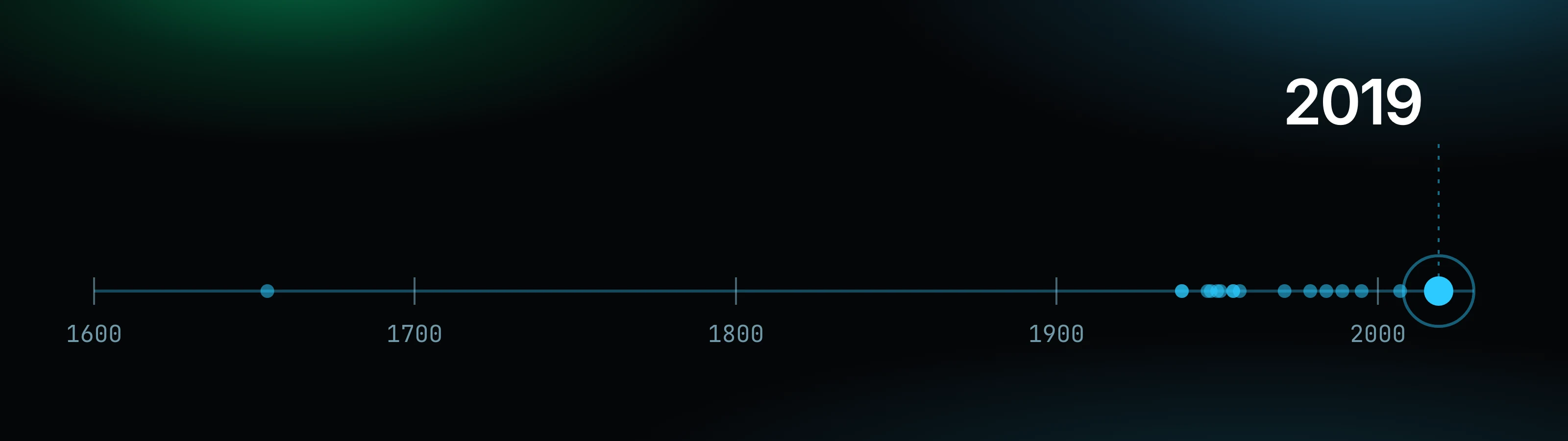
Across this history of decision intelligence we’ve followed a long road: from Kantorovich’s linear programming and Dantzig’s simplex method, through von Neumann’s duality, Nash’s game theory, Khachiyan’s polynomial-time breakthrough, Karmarkar’s practical revolution and the interior-point methods that followed, to the convergence of machine learning with optimization. Each step widened what could be computed and so what could be decided well.
Yet some limits remain. Certain problems seem to need work that grows explosively with their size on any ordinary computer, and modern business and policy decisions can strain the best classical methods. Quantum computing is the field many hope will move some of those limits. This post looks at what it has shown so far, what is still experiment, and what is only hope.
A note on the name: “quantum decision theory” is also the name of a separate idea, developed by Vyacheslav Yukalov and Didier Sornette from the late 2000s, that uses the mathematics of quantum theory to describe how people actually choose. This post is about the other meaning: quantum computers applied to decision problems.
01The Quantum Computing Revolution Meets Decision Science
The story begins with quantum computing itself, proposed in the 1980s. Ordinary computers work with bits that are either 0 or 1. Quantum computers use qubits, which can be in a superposition of both and can be entangled with one another, and so process information in a different way.
For a few problems, quantum algorithms are known to be dramatically faster. Peter Shor’s 1994 algorithm would factor large numbers exponentially faster than any known classical method, which is why it threatens today’s encryption; Lov Grover’s 1996 search algorithm gives a smaller, square-root speedup for searching without structure. For most optimization problems that businesses face, no exponential quantum speedup has been proven.
In 2019, Google reported that its 53-qubit Sycamore processor had completed a narrow sampling task in about 200 seconds that it estimated would take a classical supercomputer 10,000 years (Arute et al., Nature, 2019). IBM disputed the estimate, and later classical methods narrowed the gap considerably. The task had no practical use; its point was that quantum hardware can do something hard for classical machines.
For decision intelligence, the hope is that quantum algorithms might one day solve some optimization problems that are out of classical reach, and speed up parts of machine learning. That hope is not yet a result.
The foundations come from researchers including Peter Shor and Lov Grover; Seth Lloyd, who with Aram Harrow and Avinatan Hassidim proposed a quantum algorithm for solving systems of linear equations in 2009, a basis for much of quantum machine learning; and John Preskill, who in 2018 named today’s machines “noisy intermediate-scale quantum” (NISQ) devices: useful for experiments, too small and error-prone for most of what has been promised.
02Beyond Classical Limitations: The Quantum Advantage
To see why the field draws attention, consider the limits that constrain even the best classical decision systems:
Exponential Scaling Problems: many optimization problems have a number of possible answers that grows exponentially with their size. Even the best classical algorithms eventually run out of road.
Combinatorial Complexity: portfolios with complex rules, supply chains with many dependencies and plans with many scenarios can all explode in this way.
Problems that are themselves quantum: simulating molecules for new drugs and materials is hard for classical computers because the molecules obey quantum mechanics. This is one of the most plausible places for a quantum advantage.
How a quantum algorithm helps is often described loosely. Superposition does not simply try every answer at once and read off the best: a measurement returns one answer at random. A useful quantum algorithm arranges interference so that the amplitudes of wrong answers cancel and those of right answers grow, and only some problems have the structure that allows this.
03The Corporate Strategy Application: Quantum-Enhanced Portfolio Optimization
Portfolio optimization is one of the business problems most often tried on quantum hardware.
Choosing a portfolio means finding the mix of investments that gives the best return for the risk, across many assets, their correlations, the rules a fund must follow, and several time horizons. Realistic versions are hard enough that classical methods often simplify them.
Researchers at banks and at quantum hardware companies such as D-Wave have published experiments that write small portfolio problems in a form a quantum annealer or a quantum algorithm can work on. They could, in principle:
- Search larger sets of possible investments without simplifying assumptions
- Include rules that reflect real regulatory and operational limits
- Combine with classical methods that handle the rest of the work
So far, these experiments have been small, and none has clearly beaten the best classical methods on problems of practical size. They are worth watching as research, not yet as a tool.
04The Public Sector Applications: Quantum Urban Planning
Public planning has hard optimization problems too: transport networks, utilities, housing, zoning, environmental protection and services, all interdependent. Planners often optimize each part separately because doing them together is too hard.
Researchers have proposed quantum methods for pieces of this, such as traffic flow, routing and scheduling, and some have been tried in small pilots. In principle such methods could:
- Treat interdependent choices together rather than one system at a time
- Weigh several goals at once
- Explore many scenarios for an uncertain future
These remain experiments. No city plans its infrastructure with a quantum computer today, and whether quantum methods will do better than classical ones here is an open question.
05Quantum Machine Learning: The Next Frontier
Quantum machine learning asks whether quantum computers can find patterns or make predictions better than classical ones. A widely cited review by Biamonte and colleagues (2017) set out the possibilities and the obstacles.
Some proposed speedups depend on loading large amounts of data into a quantum computer quickly, which is itself an unsolved problem; others have since been matched by new classical methods (see the quantum-inspired algorithms below). Small demonstrations exist; a practical advantage on real business data has not been shown.
If the obstacles are overcome, quantum machine learning might one day help with:
- Customer behaviour analysis with very many interacting variables
- Supply chain planning under complex, changing conditions
- Financial risk models with many dependencies
- Strategic planning across more scenarios than classical computing can explore
06Quantum Game Theory: Strategic Interaction in the Quantum Era
Quantum ideas also extend Nash’s game theory. Quantum game theory, begun in 1999 by David Meyer and by Jens Eisert, Martin Wilkens and Maciej Lewenstein (Eisert et al., 1999), asks what changes when players can use quantum strategies.
In these models, players who share entangled quantum states can sometimes reach outcomes that are impossible in the classical game; in the quantum version of the prisoner’s dilemma studied by Eisert and colleagues, the players can escape the dilemma.
These results are theoretical, and they depend on players being able to share and manipulate quantum states. They are interesting for what they show about strategy; their business use is speculation.
07The Technical Revolution: Quantum Algorithms for Optimization
The main families of quantum methods for optimization are:
Quantum Approximate Optimization Algorithm (QAOA): proposed by Farhi, Goldstone and Gutmann in 2014 (arXiv:1411.4028) for combinatorial problems such as scheduling and allocation. Whether it beats the best classical methods on any useful problem is still being studied.
Variational Quantum Eigensolvers (VQE): methods that share the work between a quantum and a classical computer, aimed mainly at chemistry and materials, for example finding the energy of a molecule.
Quantum Machine Learning Algorithms: quantum versions of support vector machines, neural networks and reinforcement learning, mostly at the stage of theory and small experiments.
Quantum Annealing: a specialised approach, sold commercially by D-Wave, that lets a physical system settle into a low-energy state that encodes a good answer. It has been tried on scheduling, routing and allocation problems; clear evidence that it beats good classical methods on such problems has been elusive.
These are the bridge from quantum principles to decision problems. Today’s machines are small and noisy, and no one knows when, or for which problems, they will become practical.
08The Computational Infrastructure Challenge
Quantum computers need specialised hardware, software and expertise. The machines available now are noisy, small, and need extreme conditions such as temperatures near absolute zero.
Governments and large technology companies, including IBM, Google, Microsoft and Amazon, are investing heavily, alongside many start-ups.
Cloud services such as Amazon Braket, IBM Quantum and Azure Quantum let organisations run small experiments on real quantum hardware without owning any.
If the technology matures, it may follow the path classical computing took: first a few high-value specialist uses, then wider adoption as it becomes cheaper and easier.
09The Integration Challenge: Hybrid Classical-Quantum Systems
Any practical use will almost certainly be hybrid: classical computers doing most of the work, such as preparing data, running the interface and checking results, and a quantum processor handling one hard step inside a larger workflow.
Hybrid systems bring their own challenges:
- Joining the classical and quantum parts cleanly
- Deciding which part of the work, if any, is worth sending to the quantum processor
- Coping with errors, since today’s qubits are noisy and error correction is still being developed
- Scaling as both parts grow
Several large companies have run pilot projects with hybrid methods in areas such as logistics, chemistry and aviation. These are explorations, not systems in daily use.
10The Talent and Skills Revolution
Quantum methods for decisions need people who combine quantum physics, computer science, optimization and knowledge of the business problem: a rare mix.
Universities have started quantum computing courses, and training is appearing for data scientists and optimization specialists who want to learn the field.
The challenge has precedents: similar shifts in skills came with personal computers, the internet and machine learning. Organisations that learn early may be better placed if, and when, the technology matures.
11The Ethical and Security Implications
Quantum computing raises its own ethical and security questions:
Cryptography: a large, error-corrected quantum computer running Shor’s algorithm would break much of today’s public-key encryption. That is why new “post-quantum” encryption standards are being adopted now, before such machines exist.
Unequal access: if quantum computing does bring large advantages, organisations with access to it could pull ahead of those without, a new kind of digital divide.
Transparency: quantum algorithms can be even harder to explain than classical machine learning, which makes accountability harder.
National security: quantum capabilities matter to military, intelligence and economic strategy, which brings geopolitics into the field.
Handling these questions needs technologists, policymakers, ethicists and business leaders working together.
12The Near-Term Horizon: Quantum-Inspired Classical Algorithms
A notable result came from the other direction. In 2018, Ewin Tang, then an undergraduate, showed that a quantum algorithm for recommendation systems, thought to be exponentially faster than any classical method, could be matched by a new classical algorithm inspired by it (Tang, 2018). Similar “dequantized” results followed for other quantum machine learning proposals.
Such quantum-inspired classical methods run on ordinary computers today. They show that thinking about quantum algorithms can improve classical ones, and that a claimed quantum advantage needs to be compared against the best classical method, not the usual one.
13The Long-Term Vision: Quantum-Native Decision Intelligence
Further out, some imagine decision systems built around quantum effects from the start. Such systems might:
- Use superposition and interference to search large spaces of strategies in ways classical systems can’t
- Use entanglement to represent tightly linked variables
- Use quantum sensors to measure things classical instruments can’t
This is speculation. It shows where the field’s ambitions lie, not what it has delivered.
14The Integration with Existing Decision Intelligence
If quantum methods mature, they will add to classical decision intelligence rather than replace it. The simplex method, interior-point methods, machine learning and game theory will remain the right tools for most problems, where classical methods are good enough or a quantum approach isn’t worth its cost.
The likely future is a choice of tool per problem: classical, quantum-inspired, or, for a few hard steps, quantum.
That continues the pattern of this whole history: new advances build on earlier ones rather than replacing them.
15Conclusion: The Quantum Future of Decision Intelligence
Quantum computing is the most uncertain frontier in this history. It has shown that quantum hardware can do things that are hard for classical machines, and it has produced elegant algorithms. It has not yet shown a practical advantage on the decision problems businesses and governments face.
The road we have traced, from Kantorovich’s plywood trust and Dantzig’s simplex method to quantum processors cooled near absolute zero, shows how far the ability to decide with mathematics has come. Each step made harder decisions possible.
Quantum computing may be the next step, for some problems, some day. Until then, it is a field to follow with curiosity and to judge by results, compared against the best classical methods.
It also reminds us that capability must come with judgment in how it is used. Whatever tools arrive, the future of decision intelligence lies in combining human judgment with ever more powerful computation, used well.
16References
- Nielsen, M. A., & Chuang, I. L. (2010). Quantum computation and quantum information. Cambridge University Press.
- Arute, F., et al. (2019). Quantum supremacy using a programmable superconducting processor. Nature, 574, 505–510.
- Biamonte, J., Wittek, P., Pancotti, N., Rebentrost, P., Wiebe, N., & Lloyd, S. (2017). Quantum machine learning. Nature, 549, 195–202.
- Preskill, J. (2018). Quantum computing in the NISQ era and beyond. Quantum, 2, 79.
- Farhi, E., Goldstone, J., & Gutmann, S. (2014). A quantum approximate optimization algorithm. arXiv:1411.4028.
- Tang, E. (2018). A quantum-inspired classical algorithm for recommendation systems. arXiv:1807.04271.
- McArdle, S., Endo, S., Aspuru-Guzik, A., Benjamin, S. C., & Yuan, X. (2020). Quantum computational chemistry. Reviews of Modern Physics, 92, 015003.
- Eisert, J., Wilkens, M., & Lewenstein, M. (1999). Quantum games and quantum strategies. Physical Review Letters, 83, 3077.
First published on blog.othor.ai, 25 Jun 2025; revised 23 Nov 2026.